






MOSFET Thermal Design and Reliability in BMS Systems
2026-03-05
Introduction
Battery Management Systems (BMS) are essential for keeping modern battery packs safe and reliable. In most cases, BMS designs perform very well during laboratory validation. Electrical parameters look good, protection circuits work as expected, and the system appears ready for real-world use.
However, many engineers eventually face a frustrating situation. A BMS that passed all lab tests starts showing problems after months or years of operation in the field.
Sometimes performance drops. In more serious cases, the system may fail completely.
After careful failure analysis, the cause is often traced back to something that was not obvious during testing: long-term thermal stress on power MOSFETs.
As battery systems in electric vehicles, energy storage, and light electric mobility continue to operate mostly in the 200V–650V voltage range, managing MOSFET temperature becomes a key factor in system reliability.
Why MOSFETs Generate Heat
MOSFETs play several important roles inside a BMS. They are commonly used for:
· Main battery switching
· Pre-charge control
· Protection circuits
· Active balancing
While performing these tasks, MOSFETs generate heat mainly from two types of losses.
Conduction Loss
Conduction loss occurs whenever current flows through the MOSFET channel. The main factor behind this loss is the device’s on-resistance (Rds(on)).
Even small differences in Rds(on) can have a noticeable impact when large currents are involved.
Switching Loss
Switching loss happens when the MOSFET transitions between the ON and OFF states. During these short moments, voltage and current overlap, producing additional power loss.
In systems with frequent switching or higher bus voltages, switching loss can become significant.
When these losses accumulate on a compact BMS board, device temperature gradually rises.
Junction Temperature and Device Aging
All the heat generated inside a MOSFET eventually reaches the junction temperature (Tj).
Datasheet current ratings typically assume operation at the maximum allowable junction temperature under controlled conditions. In real applications, however, the device may experience higher ambient temperatures and repeated thermal cycling.
Over time, this thermal stress can lead to several degradation mechanisms.
Mechanical Fatigue
Different materials inside the MOSFET package expand and contract at different rates when temperatures change. Repeated thermal cycling creates mechanical stress on bonding wires and solder joints.
This stress can eventually cause bond wire fatigue or solder joint cracks.
Gate Oxide Aging
Long-term exposure to high temperature can also affect the MOSFET’s gate oxide layer. Electron traps may form inside the oxide, which can shift parameters such as threshold voltage (Vth) and impact switching performance.
These changes may not be noticeable immediately, but they can gradually reduce device reliability.
Thermal Challenges in BMS Designs
Thermal management is especially difficult in BMS systems for several practical reasons.
Limited Space
BMS boards are usually designed to be compact. There is often very little space available for large copper areas or heat sinks.
In many designs, MOSFETs rely only on the PCB for heat dissipation.
Thermal Coupling
MOSFETs are rarely the only components generating heat. Inductors, shunt resistors, and other power devices are often placed nearby.
When multiple components heat the same area, the local temperature rises. This creates thermal “hot spots” or heat islands that push MOSFET junction temperatures higher than expected.
Important Parameters for MOSFET Selection
Because of these challenges, choosing the right MOSFET becomes extremely important for BMS reliability.
Thermal Resistance (RθJA)
Thermal resistance from junction to ambient (RθJA) indicates how effectively heat can leave the device.
However, datasheet values are usually measured under ideal conditions at 25°C ambient temperature. In real systems without forced cooling, the effective thermal resistance can be much higher.
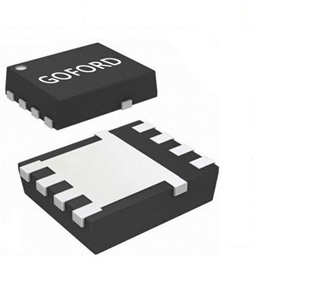
Packages such as DFN, TO-252, and TO-263 help improve heat transfer by providing larger thermal pads and better contact with the PCB.
Safe Operating Area (SOA)
Certain events in BMS systems — such as pre-charging or short-circuit protection — can expose MOSFETs to high current for short periods.
The device must remain within its Safe Operating Area (SOA) during these events. A strong SOA provides extra safety margin during abnormal operating conditions.
Parameter Consistency in Parallel MOSFETs
To handle higher current, designers often connect multiple MOSFETs in parallel.
However, small differences in Rds(on) or threshold voltage can lead to uneven current sharing. Devices carrying more current may heat up faster and age sooner.
MOSFETs with tight parameter distribution help ensure more stable parallel operation.
Design Strategies for Different Voltage Platforms
Systems Below 200V
Applications such as light electric vehicles or portable energy storage often operate below 200V.
These systems usually have very limited space and little or no forced cooling.
Key design strategies include:
· Using packages with low thermal resistance
· Increasing copper area and thermal vias on the PCB
· Choosing MOSFETs with low gate charge (Qg) to reduce switching losses
Systems from 200V to 650V
In higher voltage systems, switching losses become more significant.
Instead of focusing only on Rds(on), engineers should consider the Figure of Merit (FOM):
FOM = Rds(on) × Coss
This parameter helps evaluate the balance between conduction and switching performance.
Proper gate drive design and careful PCB layout can also reduce parasitic inductance and improve switching behavior.
GOFORD MOSFET Solutions
GOFORD provides MOSFET solutions designed for battery applications across the 200V–650V range.
Through optimized chip design and packaging technology, GOFORD MOSFETs offer:
· Strong thermal performance
· Stable parameter consistency
· Robust Safe Operating Area
· Balanced Figure of Merit
These characteristics help reduce system temperature rise and improve overall reliability in demanding BMS applications.
Conclusion
In many battery systems, MOSFET thermal behavior becomes the hidden factor that determines long-term reliability.
Even when electrical performance looks perfect during testing, long-term thermal stress can slowly degrade device performance and eventually cause failures.
By selecting MOSFETs with strong thermal characteristics and carefully optimizing PCB design, engineers can significantly improve the durability and stability of their BMS systems.
With balanced performance and reliable thermal behavior, GOFORD MOSFETs help engineers build battery systems that stay stable long after they leave the lab.

 Latest news
-
2026-09-01
High-Frequency Inverters 2026: 20kHz+, Miniaturization & SiC Synergy — How to …
-
2026-08-13
Data Center BBU Power: Key MOSFET Selection Criteria & Goford Solutions
-
2026-07-31
MOSFET: The Unsung Core of All Power Systems
-
2026-07-15
BESS MOSFET Selection Guide: Pre-Charge, Main Relay & PCS Circuits
-
2026-06-24
Energy Security Rises: Why BESS Is Now a Core Pillar of the Power System