





High-Frequency Inverters 2026: 20kHz+, Miniaturization & SiC Synergy — How to Choose Your MOSFET?
2026-09-01
PV and energy-storage inverters are moving toward high-frequency operation, higher power density and deeper integration. In 2026, mainstream inverter switching frequencies have entered the 20kHz–100kHz range — smaller size, higher efficiency and lower EMI are now the core competitive edge.
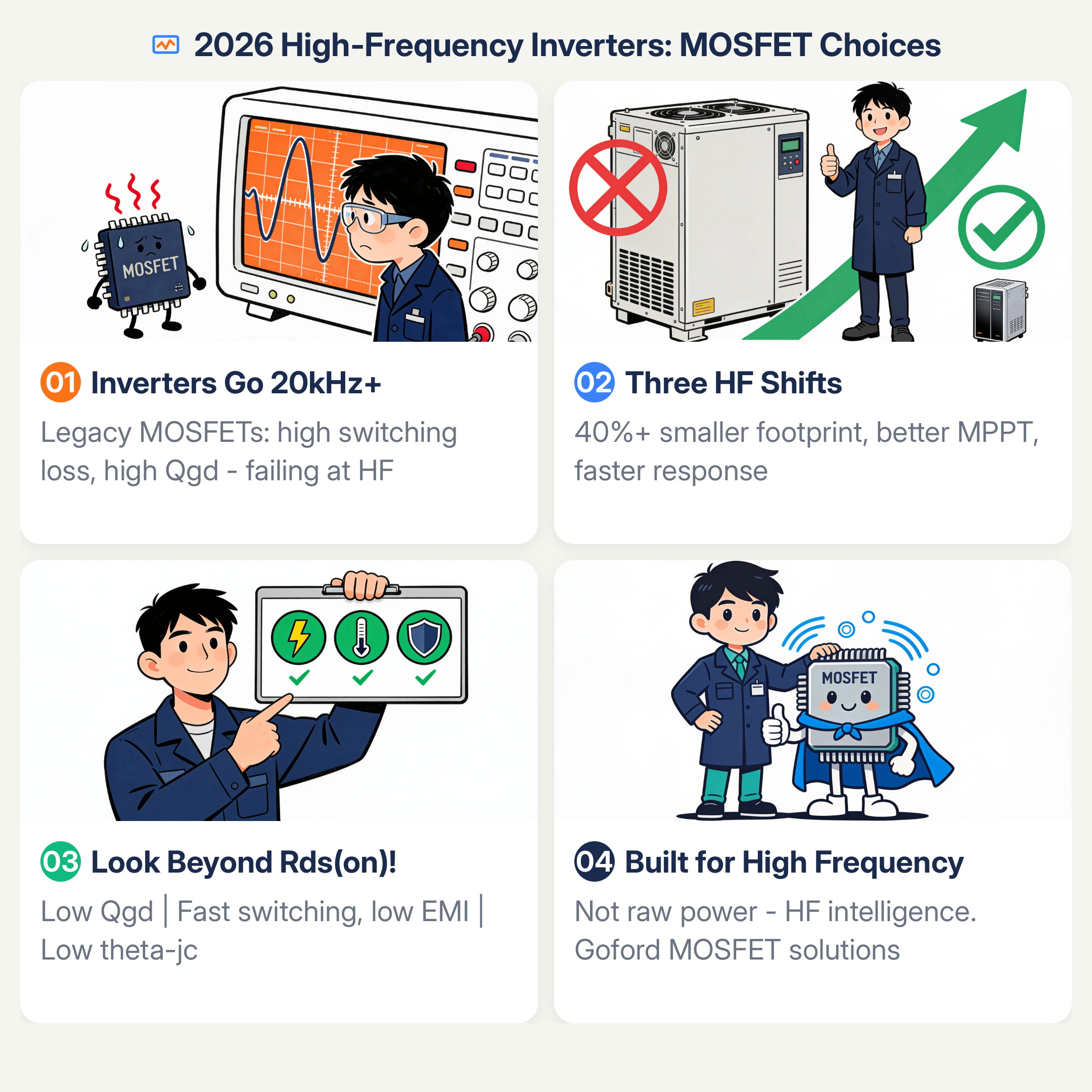
High-frequency operation brings three game-changing shifts:
● Inductor and capacitor footprints shrink dramatically — power density up 40%+
● Faster system dynamic response, better MPPT accuracy and grid-connection quality
● Legacy MOSFETs, with high switching loss and high Qgd, struggle to keep up in high-frequency designs
In high-frequency inverters, MOSFET selection is no longer just about Rds(on). Three metrics decide success or failure:
● Low Qgd (gate charge): cuts switching loss — stays cool at high frequency
● Fast switching & soft-switching compatibility: boosts efficiency, eases EMI design
● Low thermal resistance, high stability: no parameter drift under prolonged full-load operation
Industry-wide pain point: generic devices see loss spikes, temperature runaway and reliability degradation at high frequency. Specs look great on paper — but they choke the moment you push them into high-frequency operation.
The core logic of high-frequency inverters: it’s not about how strong the device is — it’s about how well it “understands” high frequency.
Next up: micro-inverters — how residential and distributed scenarios are pushing devices toward 25-year lifespans.
 Latest news
-
2026-09-01
High-Frequency Inverters 2026: 20kHz+, Miniaturization & SiC Synergy — How to …
-
2026-08-13
Data Center BBU Power: Key MOSFET Selection Criteria & Goford Solutions
-
2026-07-31
MOSFET: The Unsung Core of All Power Systems
-
2026-07-15
BESS MOSFET Selection Guide: Pre-Charge, Main Relay & PCS Circuits
-
2026-06-24
Energy Security Rises: Why BESS Is Now a Core Pillar of the Power System